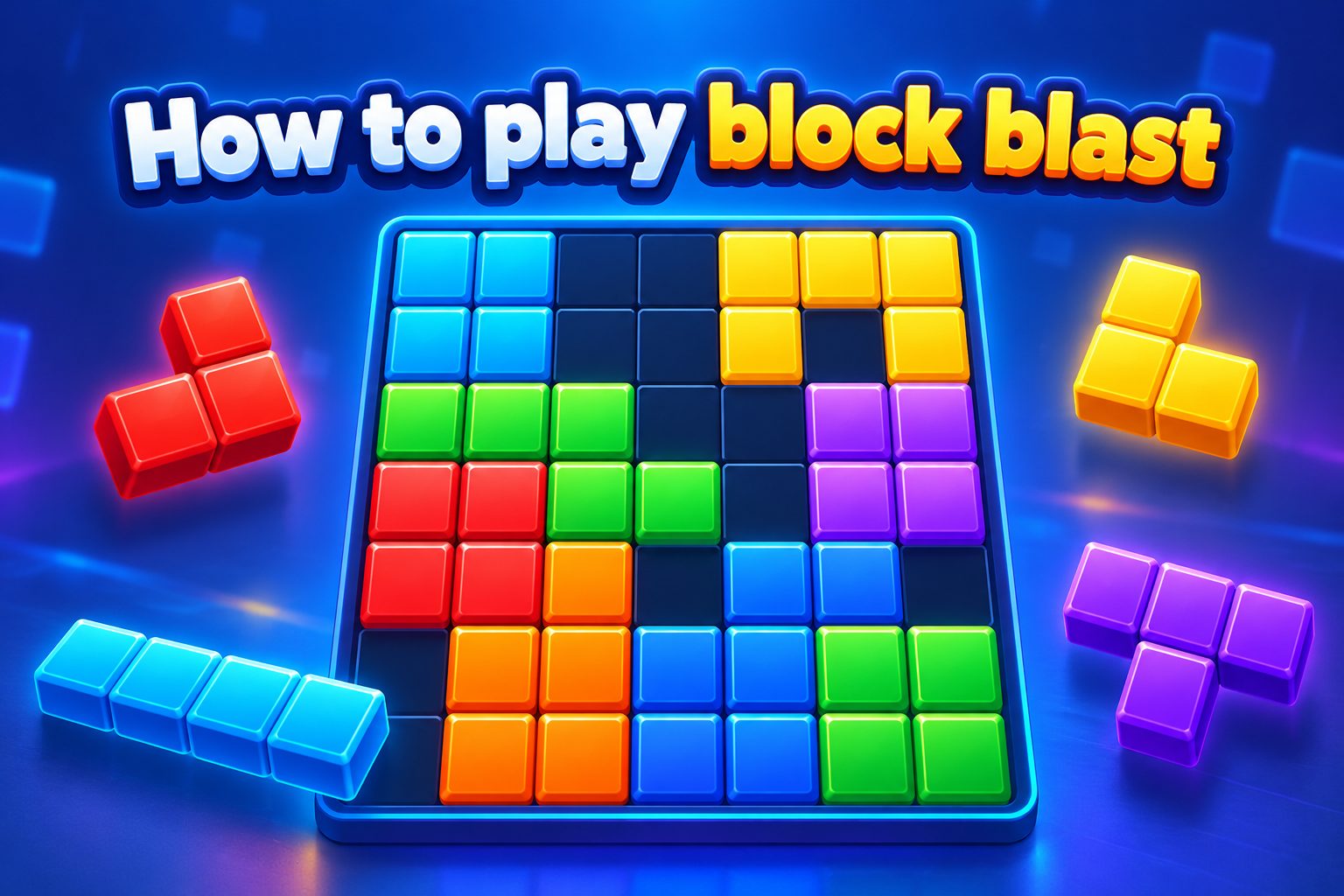
Learning how to play Block Blast is simple, but achieving high scores requires planning, patience, and smart use of the board. This block puzzle game asks you to place different shapes on a grid and complete full horizontal or vertical lines. Completed lines disappear, creating more room for future pieces. Unlike many classic puzzle games, the blocks usually do not fall automatically, so you control where every shape goes. That freedom makes the game relaxing for beginners while creating plenty of strategic depth for experienced players. In this guide, you will learn the basic rules, how scoring works, where to place difficult shapes, and how to avoid filling the board too quickly. You will also discover practical examples, common mistakes, advanced techniques, and answers to frequent questions. Whether you are playing for a quick break or trying to beat your personal record, these methods will help you make better decisions and keep each game going longer.
What Block Blast Is And Why People Play It
Block Blast is a grid-based puzzle game that combines straightforward controls with strategic decision-making.
You receive a small selection of block shapes and place them on an open board. A piece cannot be rotated in most versions, so you must find a space that matches its original shape. Once all available pieces are used, another selection appears.
The main objective is to complete horizontal or vertical lines. A finished line clears from the grid, gives you points, and creates space. Some moves can complete several lines at once, producing larger rewards and useful chain opportunities.
The game has no traditional finish line. A round continues until none of the available pieces can fit on the board. Your practical goal is therefore to score points while preserving enough open space to survive future selections.
This balance makes the game appealing. Placing a piece is easy, but every placement changes the options available later. A move that looks helpful now may leave an awkward gap that becomes impossible to fill.
Block Blast can also support concentration, visual reasoning, and pattern recognition. It encourages players to compare shapes, anticipate consequences, and delay tempting moves when a safer placement offers better long-term value.
Basic Block Blast Rules For Beginners
Before developing a strategy, learn the rules that control each round and determine when the game ends.
1. Place Blocks On The Grid
Select one of the available shapes and move it onto empty squares. Every square covered by the piece must be open. If even one part overlaps an occupied square or extends beyond the grid, the placement will not be accepted.
2. Use Every Available Shape
Players usually receive several pieces at the same time. After placing the entire group, a new group appears. You can often use the pieces in any order, making it important to compare all available placements before committing to the first obvious move.
3. Complete Horizontal Or Vertical Lines
A line disappears when every square across a complete row or column is filled. Blocks from different turns can contribute to the same line. Completing intersecting rows and columns with one placement can clear several areas simultaneously and earn additional points.
4. Keep Enough Space For Large Pieces
Block shapes vary in size and layout. Some are compact, while others need a long or wide opening. Because you cannot predict every future piece, keeping at least one substantial open area improves your chance of accommodating an inconvenient new shape.
5. Remember That Pieces Stay In Place
Placed pieces do not drop toward the bottom as they would in a falling-block puzzle. They remain exactly where you release them until they become part of a completed line. This rule gives you control but makes careless gaps especially costly.
6. Continue Until No Move Remains
The round ends when none of the current pieces fits anywhere on the board. One unusable shape does not always cause an immediate loss if another available piece can clear space first. Check whether a smaller piece can rescue the position.
How To Start A Block Blast Game
A consistent opening routine helps you avoid rushed decisions and creates a flexible foundation for the rest of the round.
- Inspect the board: Confirm how much space is open and identify any nearly completed lines.
- Review every shape: Compare the full selection before moving a piece.
- Find the hardest piece: Notice which shape has the fewest safe placements.
- Test different orders: Consider whether one piece can clear space for another.
- Protect large openings: Avoid dividing an open area without a clear benefit.
- Place the first piece: Choose a position that supports line completion and flexibility.
- Recheck the grid: Study the new layout instead of repeating the same assumption.
- Use the remaining pieces: Place them in the order that leaves the cleanest board.
Smart Block Placement Techniques
Good placement is less about filling empty squares and more about protecting useful space for later turns.
1. Build From Stable Edges
Edges can provide predictable boundaries for compact building. Placing suitable pieces along them may reduce scattered empty squares in the middle. However, do not fill every edge automatically, because long shapes may later need open rows or columns near those boundaries.
2. Keep The Center Flexible
The center connects more rows and columns than a corner, so open central space can accept a wider variety of shapes. Avoid creating a permanent wall through the middle unless it completes lines or produces a board that remains easy to manage.
3. Avoid Single-Square Holes
A one-square hole surrounded by occupied cells is difficult to repair because only a piece containing a correctly positioned single block can fill it. Before placing an unusual shape, examine its edges and make sure it does not trap tiny isolated spaces.
4. Match Shapes With Existing Gaps
Look for natural matches between the available blocks and the board’s empty areas. An L-shaped piece may complete a corner pattern, while a short bar may finish a nearly full row. Matching shapes efficiently prevents gaps from becoming increasingly irregular.
5. Preserve Long Open Channels
Long pieces can become dangerous when rows and columns are fragmented. Maintain at least one uninterrupted horizontal or vertical channel when possible. This does not guarantee that every bar will fit, but it gives you valuable protection against difficult selections.
6. Prefer Placements With Multiple Benefits
The strongest move often does more than score immediately. It may complete a line, smooth an uneven area, and preserve room for another piece. Compare placements by their total effect on the board rather than judging them only by instant points.
How Block Blast Scoring Works
Exact scoring details may vary between versions, but the same broad principles usually apply.
- Block Placement: Placing pieces generally adds points based on the blocks used.
- Completed Lines: Clearing a full row or column provides an additional reward.
- Multiple Clears: Completing several lines with one move can produce more points.
- Combos: Clearing lines across consecutive moves may build a valuable scoring sequence.
- Board Survival: Longer rounds create more opportunities to place pieces and score.
- Special Modes: Alternative challenges may use different goals, bonuses, or obstacles.
Strategies For Longer Block Blast Games
Survival depends on maintaining options, especially when the game gives you an awkward set of pieces.
1. Plan For All Current Pieces
Do not place a convenient piece until you know where the other current shapes could go. Mentally assign a possible location to each one. If two pieces need the same area, change the order or find a placement that creates more room.
2. Use Difficult Shapes Early
Large squares, long bars, and irregular pieces usually have fewer legal positions. Placing them first can prevent them from becoming trapped after smaller pieces divide the board. An exception is when a small piece can immediately clear the required space.
3. Create Lines In Both Directions
Building only horizontal rows or only vertical columns can produce rigid patterns. Develop both directions so that one placement may contribute to several possible clears. Intersections are especially useful because a single block can complete a row and column together.
4. Clear Space Before It Is Urgent
Waiting until the board is nearly full reduces your choices and makes every poor shape dangerous. Clear accessible lines while you still have alternatives. A moderately valuable early clear is often safer than chasing a perfect combination that may never appear.
5. Keep Open Areas Connected
One large connected region is generally more useful than several tiny spaces with the same total area. Connected space can accommodate more shapes and orientations. Avoid building barriers that split the board unless the placement immediately clears or prepares a dependable line.
6. Review The Board After Every Move
Each placement changes which lines are close to completion and which pieces remain playable. Pause briefly after a move and reassess. This habit prevents you from following an outdated plan after an unexpected clear alters the layout or opens a better option.
Common Block Blast Mistakes To Avoid
Many rounds end because of several small planning errors rather than one obviously disastrous move.
1. Filling Space Without A Purpose
Placing blocks simply because they fit can create clutter without advancing any line. Each move should ideally complete a line, prepare one, repair the board’s shape, or protect future flexibility. If it does none of these, look for a stronger location.
2. Chasing Combos At Any Cost
Combos can improve your score, but forcing a sequence may require risky placements. Do not sacrifice the only space for a large piece merely to continue a bonus. Board survival usually creates more scoring opportunities than one ambitious but fragile combination.
3. Ignoring The Full Piece Selection
A player may notice an easy placement and use it immediately, only to discover that the largest remaining shape no longer fits. Review every piece first, compare their possible positions, and prioritize the shape with the most restrictive space requirements.
4. Creating Too Many Small Gaps
Scattered holes make the board appear more open than it really is. Although many squares remain empty, few complete shapes may fit. Place pieces beside existing structures when appropriate and aim to leave broad, regular areas rather than isolated pockets.
5. Saving Every Clear For Later
Delaying a line clear can sometimes produce a multi-line move, but excessive waiting is dangerous. New shapes may block the intended setup or require the reserved space. Take reliable clears when the board is becoming crowded or future placements look uncertain.
6. Playing Too Quickly
Block Blast does not normally demand instant decisions, so speed offers little strategic advantage. Fast dragging can cause accidental placements and missed combinations. Taking a few seconds to check lines, gaps, and piece order can significantly extend the round.
Best Practices For Better Block Blast Scores
These habits improve consistency without relying on lucky piece selections.
1. Scan Rows And Columns Together
Before every placement, check both directions. Players often focus on the most obvious nearly completed row and overlook a stronger column opportunity. A combined scan can reveal intersections where one carefully positioned piece clears multiple lines and reorganizes the board.
2. Count The Required Empty Squares
When planning a clear, identify exactly which squares are missing instead of relying on a general impression. Compare those spaces with the available shapes. Accurate counting helps you recognize whether a line is genuinely close to completion or still requires an unlikely piece.
3. Leave Several Placement Options
A strong move should not depend entirely on receiving one perfect shape next. Try to create patterns that multiple blocks could complete. Flexible setups make random selections less harmful and allow you to change direction when the expected piece does not appear.
4. Separate Scoring Moves From Recovery Moves
Some turns are ideal for building combos, while others require repairing a crowded board. Recognize which situation you face. When open space is limited, prioritize survival and cleaner geometry. Once the board becomes stable, you can pursue more aggressive scoring opportunities.
5. Learn Common Shape Dimensions
Familiarity with recurring bars, squares, corners, and stepped pieces helps you evaluate space quickly. You begin to notice whether an opening is truly useful and which gaps are risky. This visual memory improves naturally when you review why unsuccessful rounds ended.
6. Protect The Board Before Protecting A Combo
A scoring streak is valuable only while legal moves remain. If continuing a combo creates severe fragmentation, accept a safer move instead. High scores generally come from combining efficient clears with long survival, not from maintaining every temporary bonus at all costs.
Practical Block Blast Move Examples
Typical board situations show how simple strategic principles guide real decisions.
1. Placing A Long Bar
If a long bar appears, first inspect every uninterrupted row and column that can hold it. Prefer a position that completes or prepares a line. Avoid consuming the only long channel unless doing so creates enough new space to justify the risk.
2. Handling A Large Square
A large square needs a broad, regular opening and becomes difficult to place on a fragmented board. Use it before smaller pieces break up suitable areas. A corner may be efficient, provided the placement does not trap narrow gaps along its edges.
3. Using A Small Single Block
A single block is extremely flexible and can repair a hole, complete an intersection, or trigger a line clear. Avoid spending it on an ordinary empty square when it can solve a difficult gap that larger shapes are unable to reach.
4. Completing Two Lines At Once
Suppose a row and column each lack squares near their intersection. Look for a shape that fills both sets of spaces. A double clear scores well and opens the board in two directions, often making the remaining pieces much easier to place.
5. Recovering From A Crowded Board
When little space remains, stop preparing distant combinations. Identify the line requiring the fewest blocks and determine whether the current selection can finish it. Use smaller pieces first only when their placement directly creates room for a more restrictive shape.
6. Choosing Between Two Safe Moves
If two placements score equally, compare the board each one leaves behind. Favor the move that keeps empty spaces connected, avoids one-square holes, and preserves long channels. Future flexibility is usually a better tiebreaker than visual neatness alone.
Advanced Block Blast Tips
Once the basic rules feel natural, these methods can improve planning and scoring efficiency.
1. Think One Complete Set Ahead
You cannot know the next selection, but you can prepare for common categories. Leave room for a long piece, a compact square, and an irregular shape. A board that supports several categories is more resilient than one designed for a specific block.
2. Use Intersections As Scoring Targets
Build rows and columns so their missing spaces overlap whenever practical. The shared square increases the value of a suitable placement and can produce simultaneous clears. Do not overbuild the setup, however, if it begins to restrict essential open areas.
3. Measure Space By Shape Compatibility
Do not judge safety only by counting empty squares. Twenty scattered squares may be less useful than twelve connected ones. Evaluate whether common shapes can actually occupy the available spaces, especially large squares and long bars that need regular openings.
4. Control Board Fragmentation
Fragmentation occurs when filled cells divide open space into awkward pockets. Reduce it by extending existing block groups and completing lines that reconnect separated areas. Sometimes a low-scoring placement is strategically valuable because it prevents the board from splitting further.
5. Delay Flexible Pieces When Safe
Small or adaptable shapes can solve many future problems. If a restrictive block already has a safe location, consider placing it first and saving the flexible piece. This ordering gives you a useful repair tool after the board changes.
6. Study The Cause Of Each Loss
After a round ends, identify the shape that could not fit and the earlier placement that removed its last useful space. This short review reveals repeated habits, such as blocking long channels or creating holes, and turns each loss into practical guidance.
Frequently Asked Questions
1. What Is The Main Goal In Block Blast?
The main goal is to place block shapes, complete horizontal or vertical lines, and earn as many points as possible before the board runs out of usable space. Since the game can continue indefinitely, survival and efficient line clearing are equally important.
2. Can Blocks Be Rotated In Block Blast?
In many standard versions, blocks cannot be rotated. You must place each shape in the orientation provided. Rules can differ between modes or versions, so check the controls available in your game before planning around rotation.
3. What Happens When A Piece Does Not Fit?
If one piece does not fit, another available piece may still create enough space by completing a line. The round usually ends only when no legal placement remains for the necessary pieces. Always search for a clearing move before assuming the game is over.
4. How Can Beginners Score More Points?
Beginners should focus on keeping open areas connected, clearing lines consistently, and checking all available pieces before moving. Avoid isolated holes and reserve space for large shapes. Longer survival naturally provides more opportunities for combos and higher total scores.
5. Is It Better To Clear Lines Immediately?
Not always. Delaying a clear may allow you to complete multiple lines or maintain a combo. However, immediate clearing is safer when the board is crowded, current pieces are restrictive, or waiting would consume important space needed for future placements.
6. Why Do Block Blast Games End So Quickly?
Short rounds usually result from fragmented space, rushed placements, or failure to plan for every current shape. Slow down, protect long channels, avoid one-square holes, and choose moves that leave several future options instead of merely fitting the present piece.
Conclusion
Learning how to play Block Blast begins with a few simple actions: place the available shapes, complete rows and columns, and keep the board open. Stronger play comes from reviewing every piece, protecting connected space, avoiding awkward gaps, and balancing immediate line clears with future flexibility.
Take time before each move and judge a placement by the board it leaves behind. With regular practice, common shapes and useful patterns become easier to recognize. Patient decisions, consistent clearing, and careful space management will help you survive longer and steadily improve your score.

Discussion